Automotive Art: From Motoring History to the Future of the Automobile
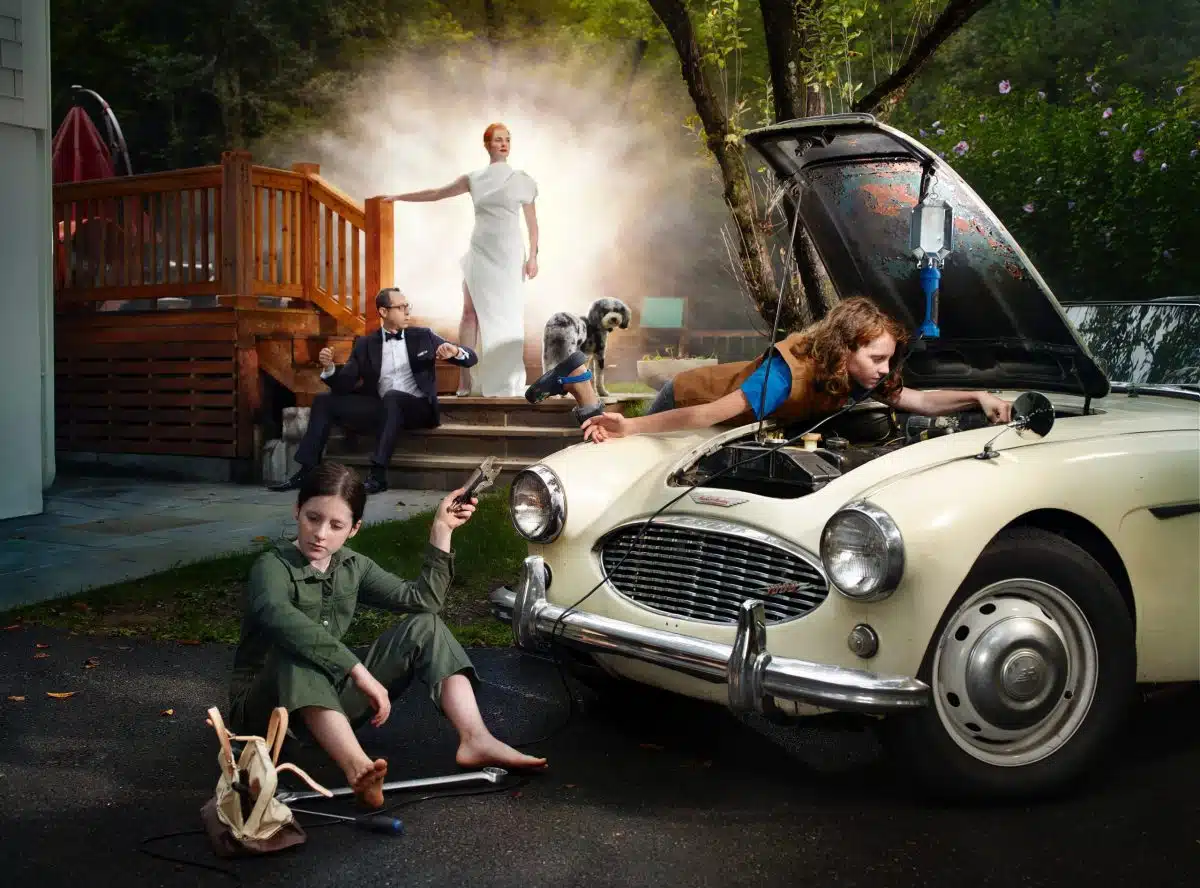
For more than a century, the automobile has inspired artists as much as it has inspired engineers, designers, photographers, and collectors.
Cars have become symbols of speed, freedom, luxury, rebellion, craftsmanship, and technological progress. A classic automobile can evoke a particular era, while a racing car can capture the intensity of competition. But automotive art does not have to look backward.
Today, contemporary artists are asking different questions. What does the automobile mean in a changing world? How might artists interpret mobility, transportation, technology, sustainability, or the relationship between people and machines?
This is where automotive art becomes more than an image of a car. It becomes a way of exploring culture, design, memory, and the future.
What Is Automotive Art?

Automotive art is a broad category that explores the automobile and the culture surrounding it through visual art.
It can include detailed paintings of classic cars, motorsport photography, abstract interpretations of vehicles, automotive design studies, sculptures, digital artworks, illustrations, and contemporary paintings that use cars as their central subject.
Some artists focus on accuracy and craftsmanship. Others are more interested in atmosphere, movement, abstraction, or the emotional associations attached to a particular vehicle.
That range is part of what makes automotive art interesting to collectors.
A painting of a 1960s sports car might appeal to someone because it recalls a particular period in automotive history. A contemporary work depicting an imagined vehicle might attract another collector because it offers a vision of what transportation could become.
Both can be considered automotive art, but they tell very different stories.
From Racing Posters to Contemporary Fine Art
The connection between cars and art is not new.
Motorsport has produced its own visual language over the decades. Racing posters, advertisements, photography, and paintings have documented famous circuits, drivers, teams, and machines. For collectors, these works can offer a connection to a specific moment in racing history.
Classic car paintings often work in a similar way. The subject may be a particular make, model, or era, but the appeal extends beyond the vehicle itself. The artwork can preserve a memory of design, craftsmanship, or an automotive culture that continues to attract enthusiasts.
This history has helped establish automotive art as a recognizable collecting category.
Yet contemporary artists do not necessarily have to follow the same formula.
Instead of simply recreating a famous vehicle, an artist can use the automobile as a starting point for a much broader visual investigation.
Automotive Art Does Not Have to Be About Nostalgia
There is an obvious appeal to vintage racing imagery and classic automobiles. Their shapes, colors, engineering, and histories provide artists with subjects that already carry cultural meaning.
But the automobile is still evolving.
Electric vehicles, autonomous technology, alternative forms of transportation, changing urban environments, and new ideas about mobility are influencing how people think about cars.
That creates an opportunity for artists to move beyond nostalgia.
A contemporary artist might question what a car should look like in the future. Another might explore how technology is changing our relationship with movement. Someone else might imagine transportation systems that do not yet exist.
The subject can be a vehicle, but the artwork can be about something much larger.
What Makes Automotive Art Collectible?
Collecting automotive art does not have to mean searching only for historically important cars or famous racing moments.
As with other forms of contemporary art, collectors can respond to the artist’s interpretation, technique, concept, originality, and visual language.
When considering a work, it can be useful to ask:
What is the artist actually saying about the automobile?
A technically impressive painting can celebrate the beauty of engineering. An abstract work might communicate speed through shape and movement. A conceptual piece might challenge assumptions about transportation altogether.
The strongest works often give viewers something to discover beyond the initial subject.
For collectors, this can make automotive art an especially engaging category. The work can appeal both to an interest in automobiles and to an appreciation of contemporary artistic practice.
Car Art Prints and Originals
Collectors encounter automotive imagery in many forms, from affordable prints and limited editions to original paintings and larger mixed-media works.
Prints can make automotive art more accessible, particularly for enthusiasts who want to live with an image connected to a favorite vehicle, driver, or period.
Original works offer a different experience.
With an original painting or drawing, the collector is acquiring the actual artwork created by the artist. Brushwork, texture, scale, materials, and small details that may disappear in reproduction become part of the experience.
For someone collecting contemporary automotive art, understanding this distinction can help clarify what they are looking for.
Do you want an artwork that celebrates a particular car?
Are you interested in the artist’s interpretation of automotive culture?
Or are you looking for something that approaches the subject from a completely unexpected direction?
There is no single answer.
When the Car Becomes the Subject of Fine Art
One of the most interesting developments in contemporary automotive art is the growing distance between automotive illustration and fine art.
The difference is not necessarily about technical skill. It is about intention.
An illustration may be created primarily to communicate what a vehicle looks like. A fine-art painting can use the vehicle as a subject while exploring ideas about identity, technology, memory, movement, or society.
This opens the door for artists who may not consider themselves automotive artists in the traditional sense.
A painter working in abstraction might interpret speed without depicting a recognizable car. A sculptor might explore the physical relationship between people and machines. A digital artist might imagine a transportation system that does not yet exist.
The automobile becomes a visual language.
Contemporary Artists Are Reimagining the Car
The next generation of automotive art may be less concerned with reproducing what already exists and more interested in imagining what comes next.
This forward-looking approach is particularly relevant to artists and designers who are interested in transportation design.
Rather than asking, “What famous car should I paint?” the question becomes, “What could the automobile become?”
That shift creates room for experimentation.
Artists can explore new forms, materials, technologies, environments, and relationships between humans and machines. They can question whether the familiar idea of a car still makes sense in the future, or imagine entirely new ways of moving through cities and landscapes.
This is where automotive culture and contemporary fine art can meet.
Art of Motoring, Reimagined
The growing interest in automotive art can be seen in exhibitions that bring together motoring history, design, and visual culture.
Traditional automotive exhibitions often celebrate the beauty and history of the automobile.
Contemporary approaches can take that foundation and push it further.
Instead of looking exclusively at what has already been built, artists can consider what has not yet been built.
That distinction matters.
An artwork does not need to document automotive history to be connected to automotive culture. It can question the present, respond to technological change, or imagine a different future.
For collectors, this creates another way to engage with the subject. The artwork becomes not only a representation of a vehicle, but a record of how artists are thinking about transportation at a particular moment in time.
Where Automotive Art Goes Next
The automobile has always existed at the intersection of art and technology.
Its form is designed. Its engineering is intentional. Its cultural meaning changes with every generation.
That makes it an unusually rich subject for contemporary artists.
The future of automotive art may include paintings that reinterpret familiar vehicles, conceptual works about mobility, imagined transportation systems, digital environments, sculpture, installation, and entirely new approaches that are difficult to categorize today.
For artists, this means there is no requirement to approach the subject in only one way.
For collectors, it means there is more to discover than classic car paintings and motorsport memorabilia.
And for anyone interested in the future of transportation, art offers something engineering alone cannot always provide: the freedom to imagine possibilities before they become reality.
Where Could You Take the Idea?
The future of the automobile will not be shaped by engineers and designers alone. Artists have a role in imagining the forms, stories, experiences, and possibilities that surround the way we move.
That exploration can start anywhere. A sketch in a notebook. An unusual vehicle concept. A painting about speed. An imagined city where transportation looks completely different. You do not need to have the final answer before you begin.
For artists and designers interested in pushing that idea further, Cars Reimagined offers an opportunity to turn that curiosity into a finished work and share it with an international audience.
Twenty selected artists will have their work exhibited at Agora Gallery in Chelsea, New York, during the New York International Auto Show, creating a meeting point between contemporary art, automotive culture, and ideas about the future.
Cars Reimagined: The International Fine Art Competition
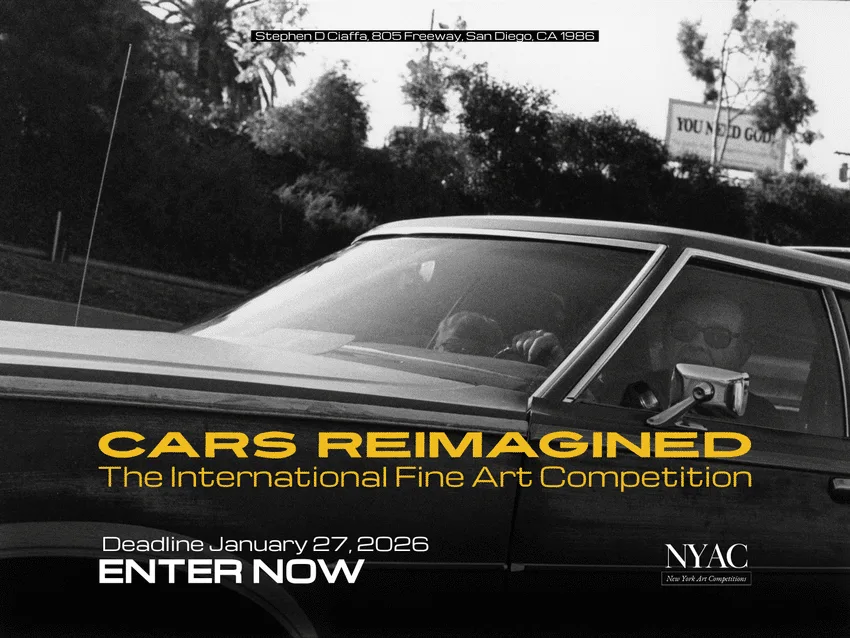
Open to: Artists, designers, and creative thinkers aged 18+
Deadline: January 26, 2027
Exhibition: Agora Gallery, Chelsea, New York, during the New York International Auto Show
Discover Cars Reimagined: The International Fine Art Competition→
The history of the automobile is filled with ideas that once seemed impossible. The next chapter starts with someone willing to imagine differently.
Have feedback on this post?
Send us a note — we read every message.